Skip to content

Manufacturing

Every bottle, sterilized at 121°C.

Primary container

Engineered to be exceptional.

Medical-grade polypropylene primary container
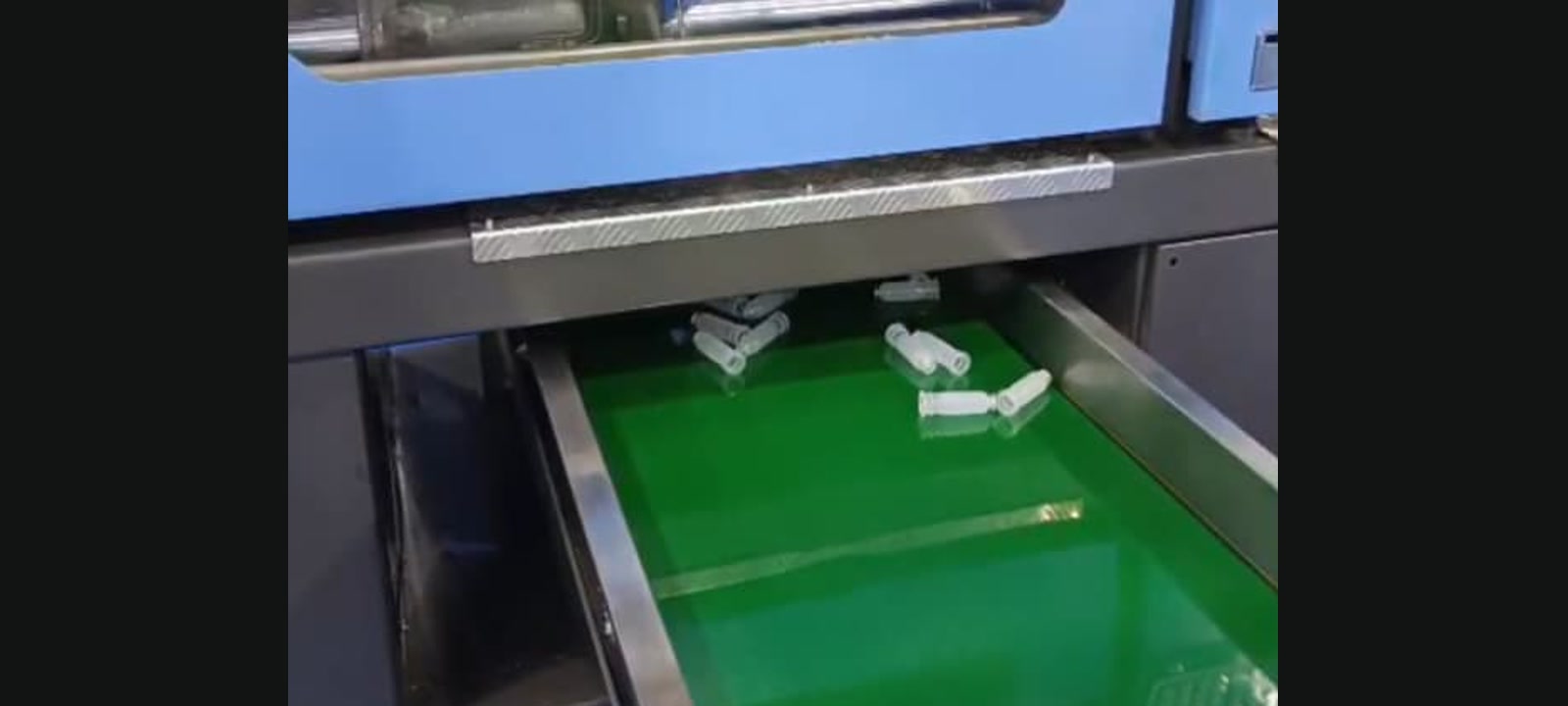
Body, neck and hanger are formed as one piece on this site, so no empty bottle is ever shipped in, stored or washed.
Tamper-evident peel-off overseal
A peel-off seal you can see has never been opened, over a medical-grade rubber disk.
Dual-site spike disk
Two spike points, each one-way, so two giving sets can run at once without leaking.
Integral rotatable hanger
Moulded as part of the bottle, and turns so the bottle hangs straight on any stand.
Sterifluid I.V. bottle in exploded view: peel-off overseal, outer cap, medical-grade rubber disk, inner cap, polypropylene body and rotatable hanger, with the 121°C terminal sterilization callout
Sterifluid primary container. Group technical literature.

Every product, made under one roof.

Products from 5 ml to 1,000 ml, every registration manufactured on this site.

STERIFLUID · 100–1,000 ml

Large-volume crystalloids

The replacement fluids used in hospitals every day: dextrose, saline, dextrose-saline, Ringer and Ringer lactate.

STERIFLUID500 ml
  • Sterifluid 5 / 10 / 25%Dextrose
  • Sterifluid NSSodium chloride 0.9%
  • Sterifluid DSDextrose 5% + sodium chloride 0.9%
  • Sterifluid R / RL / RLDRinger and Ringer lactate
  • Sterifluid N/3One-third saline
  • Sterifluid PaedsPaediatric maintenance
MINI

Small-volume parenterals

Water for injection and concentrated electrolytes, filled in the same polypropylene system as the large-volume line.

MINI50 ml
  • Mini WFISterile water for injection
  • Mini NaClSodium chloride 0.9%
  • Mini BCSodium bicarbonate 8.4%
  • Potassium chloride 7.45%Small-volume parenteral

STERI · 100–250 ml

Ready-to-use anti-infectives

I.V. antibiotics supplied premixed, so they are not reconstituted on the ward.

STERI100 ml
  • SterimetMetronidazole 500 mg / 100 ml
  • SteriofloxOfloxacin 200 mg / 100 ml
  • SterilevoLevofloxacin 500 mg / 100 ml
  • StericiproCiprofloxacin 200 mg / 100 ml
  • SterimoxMoxifloxacin 400 mg / 250 ml

STERILYTE · STERIFLUTOL · 500–1,000 ml

Maintenance and osmotic solutions

Electrolyte-dextrose maintenance, and a mannitol–sorbitol osmotic infusion. Same plant, same terminal sterilization.

STERILYTE500 ml
  • Sterilyte-MElectrolytes + dextrose
  • Steriflutol-20Mannitol 17.5% + sorbitol 2.5%

The cycle

A world-class sterilization cycle.

The sealed bottle is heated to 121°C. That kills bacteria in the finished unit. Bacterial toxins are kept out of the water, and every batch is tested for them before release.

Method
Terminal moist heat, in the sealed final container
Reference
121°C (250°F) · Ph. Eur. 5.1.1
Lethality
F₀ ≥ 8 min at 121°C, z = 10°C
Assurance
Sterility assurance level 10⁻⁶ or better
Validated at
The point of the load that heats last

Bacterial toxins (endotoxins) are controlled where they can arise: Water for Injection, tight limits on incoming materials, short holds before the autoclave. Every batch is tested before release.

Quality comes first.

01

Raw-material analysis

Incoming materials are checked before they enter the line.

02

In-process checks

Intermediates are held to written specifications at each stage.

03

Finished-product analysis

Released units are tested. Traceability is recorded against the SOP.

04

Stability studies

A standing programme, held to written protocols.

Inside one of Pakistan’s largest I.V. plants.

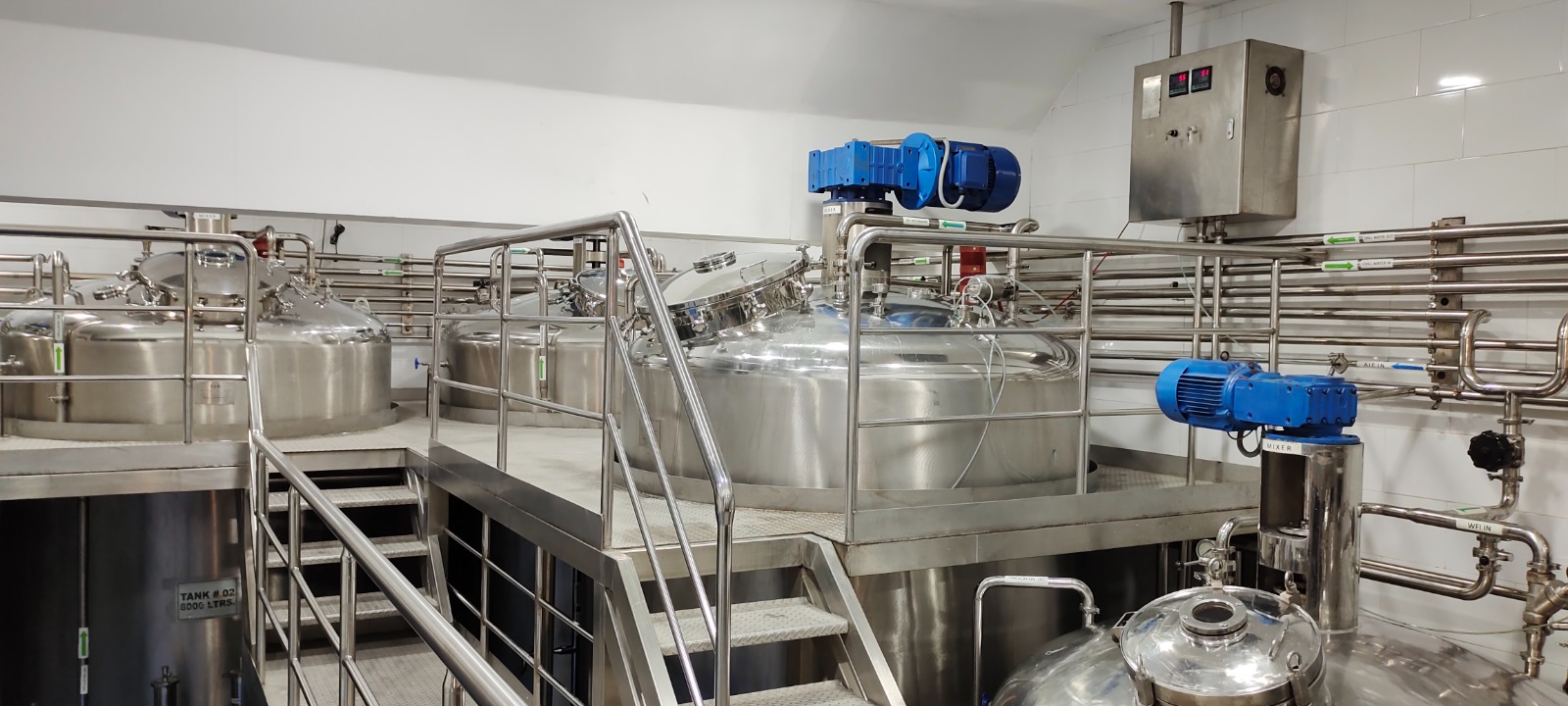
Mixing vessels with their agitator drives
The mixing hall, where the solution is made.
Polypropylene bottles leaving the blow-moulding machine
Bottle blowing. New polypropylene bottles leave the machine on site.
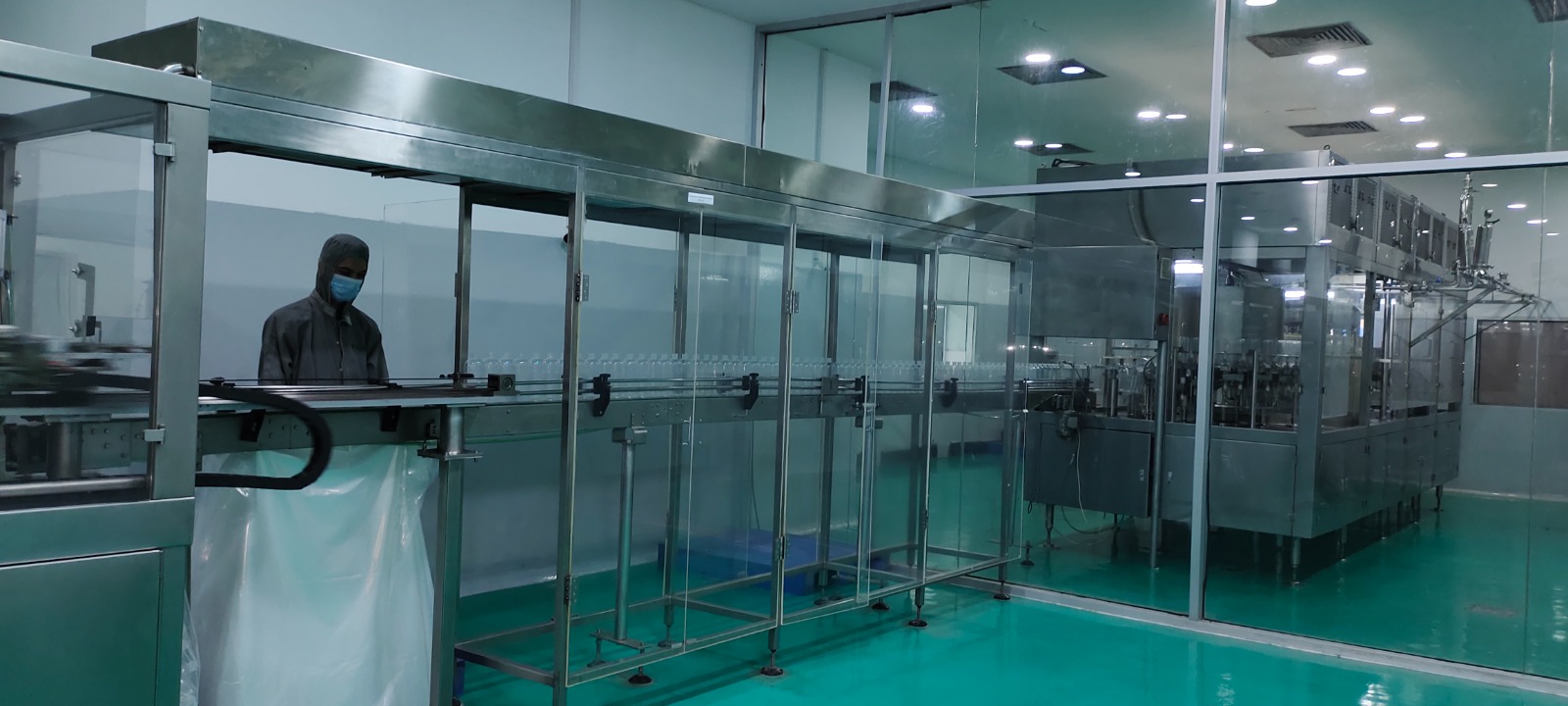
Gowned operator at the filling line
Filling line. The operator is gowned and masked.
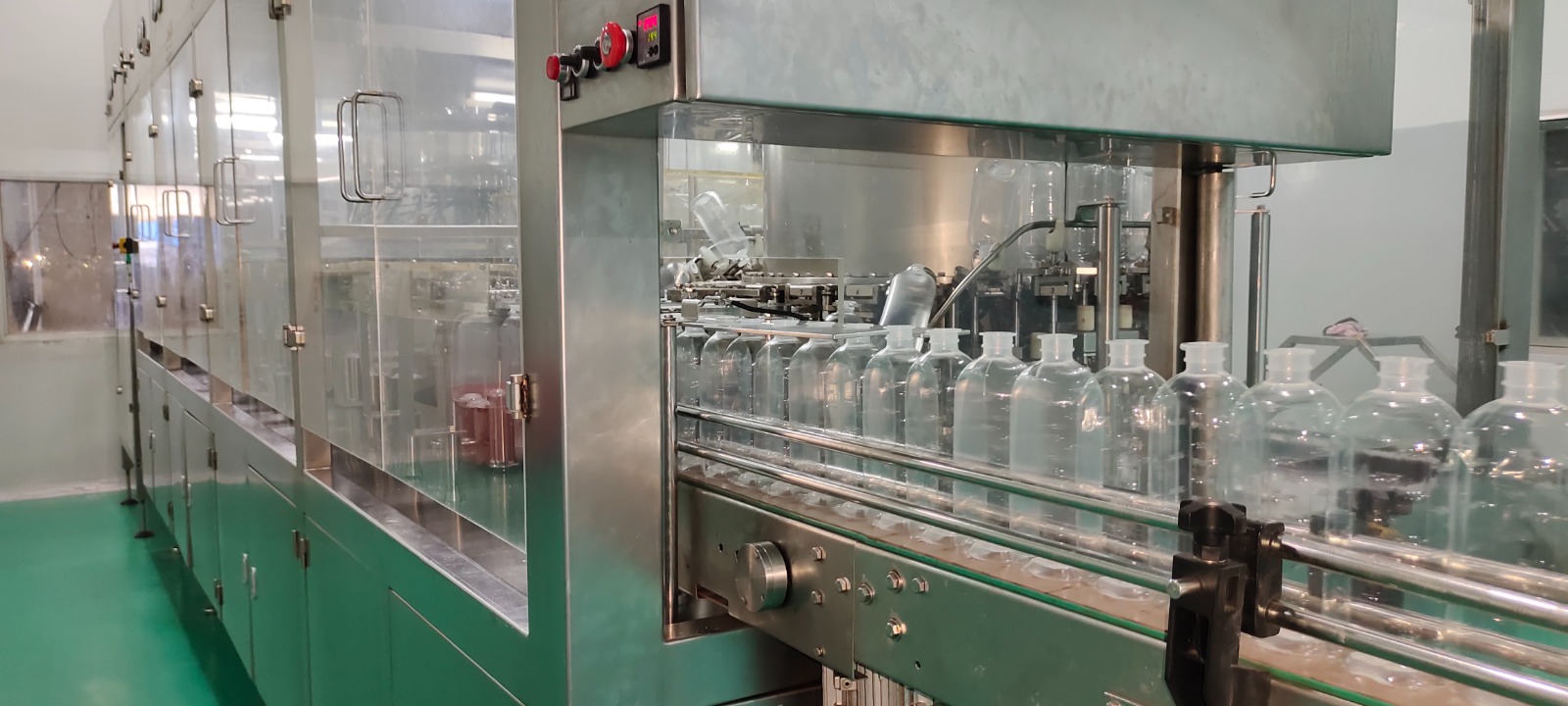
Filled polypropylene I.V. bottles on the outfeed conveyor
Filled units leaving the filler.